



Read our 2025 annual report


Knowledge Hub

Sustainable Agriculture is Our Concern
Farming is at the heart of Concern's work. We believe that smart and sustainable agriculture is key to our goal of ending extreme poverty, whatever it takes. We work with farmers in the world's poorest communities to apply innovative solutions to the challenges they face. We're at the National Ploughing Championships this year to champion the incredible work they and farmers everywhere are doing to keep producing food in the face of escalating global challenges.
Flooding, drought, heatwaves — farmers worldwide are confronted with the challenges of our warming planet. In Ireland, we have seen this with rising temperatures as droughts delay harvests and shrivel crops, and with floods as crops are washed away when the hardened ground fails to absorb the rain. In the world's poorest countries, the impacts of climate change have been even more detrimental as the severity and frequency of droughts and floods have created an environment that is hostile for crops to grow or for livestock to survive.
In addition extreme weather events, farmers everywhere are feeling impacts of a changing geo-political reality as conflict and trade blockages have caused a global fuel crisis, sending farmers’ costs skyrocketing.
Concern at The National Ploughing Championships
Ahead of the annual National Ploughing Championships, Concern Worldwide interviewed farmers across Ireland and across our programme countries to learn about the reality of farming today.
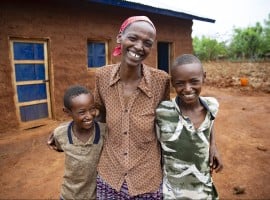
They are all featured in our 'Faces from the Farm' exhibition at The Global Solidarity Hub in this year's Ploughing Championships .
Attendees are asked to match a quote to the photo of each farmer in a challenge. This initiative aims to challenge the preconceptions of what it is to be a farmer today in Ireland and around the world, to show the shared humanity and difficulties facing farmers working in very different contexts across the world.
Concern farmers around the world


Farmers in Ireland


All of these farmers are building resilience in the face of adversity.
In the world's poorest countries, Concern supports farmers across the world's most vulnerable countries are using climate smart agriculture techniques to diversify their diets, withstand shocks, and recover quickly from floods and droughts. With farmers from Ireland and all over the globe at risk of the damage extreme weather can cause, we can all share our experiences, advancements and solidarity to create a more resilient future.
What is climate smart agriculture?
With support from our donors, Irish Aid and other partners, we are implementing solutions that can support farmers to build a more resilient and sustainable way of farming.
Climate smart agriculture is a new name for something that has actually been around for a long time, but is making a huge difference to farmers across the countries most vulnerable to climate change. It’s a set of farming methods and techniques designed to increase the resilience and productivity of land affected by the impacts of climate change. It’s not a solution to climate change - but it is a solution and a tactic to fight problems caused by extreme weather.
CSA techniques include:
- Conservation agriculture: a soil management practice based on crop rotation, minimal tillage, and mulching, to preserve soil fertility
- Improved crop variety and diversification, to improve a family’s diet and withstand climate shocks with resilient crops, such as planting short-cycle crops to avoid harvests being washed away between planting and harvest and to mature early to avoid droughts
- Soil and water management to collect, divert, or slow down the flow of water during seasonal rainfalls and reduce soil erosion
- Irrigation: by providing solar-powered pumps, tread pumps, or innovative solutions like plastic-lined basins to catch rainwater, farmers can grow successfully in the off-season and also have to work less to irrigate their crops
- Agroforestry: planting shrubs and trees on farms that can improve soil fertility, produce firewood, and grow new crops
- Post-harvest management: improving harvesting techniques and the storage, handling, transportation, processing, and packaging of crops to reduce losses and spoilage at each step of the supply chain, to ultimately improve food security
By training in climate smart techniques, farmers are better equipped to handle the current and future effects of climate shocks, and to build better food and livelihood security for themselves and their families.
Sustainable solutions


Building resilience for farmers
How can I help?


*The contents of this page are the responsibility of the author(s) and do not necessarily reflect the views of Irish Aid.


Organisations who fund us
Irish Aid

Irish Aid
1/1